


10.11.2026
Published November 2026 | Author: Martin Davis, Leading Minds Network
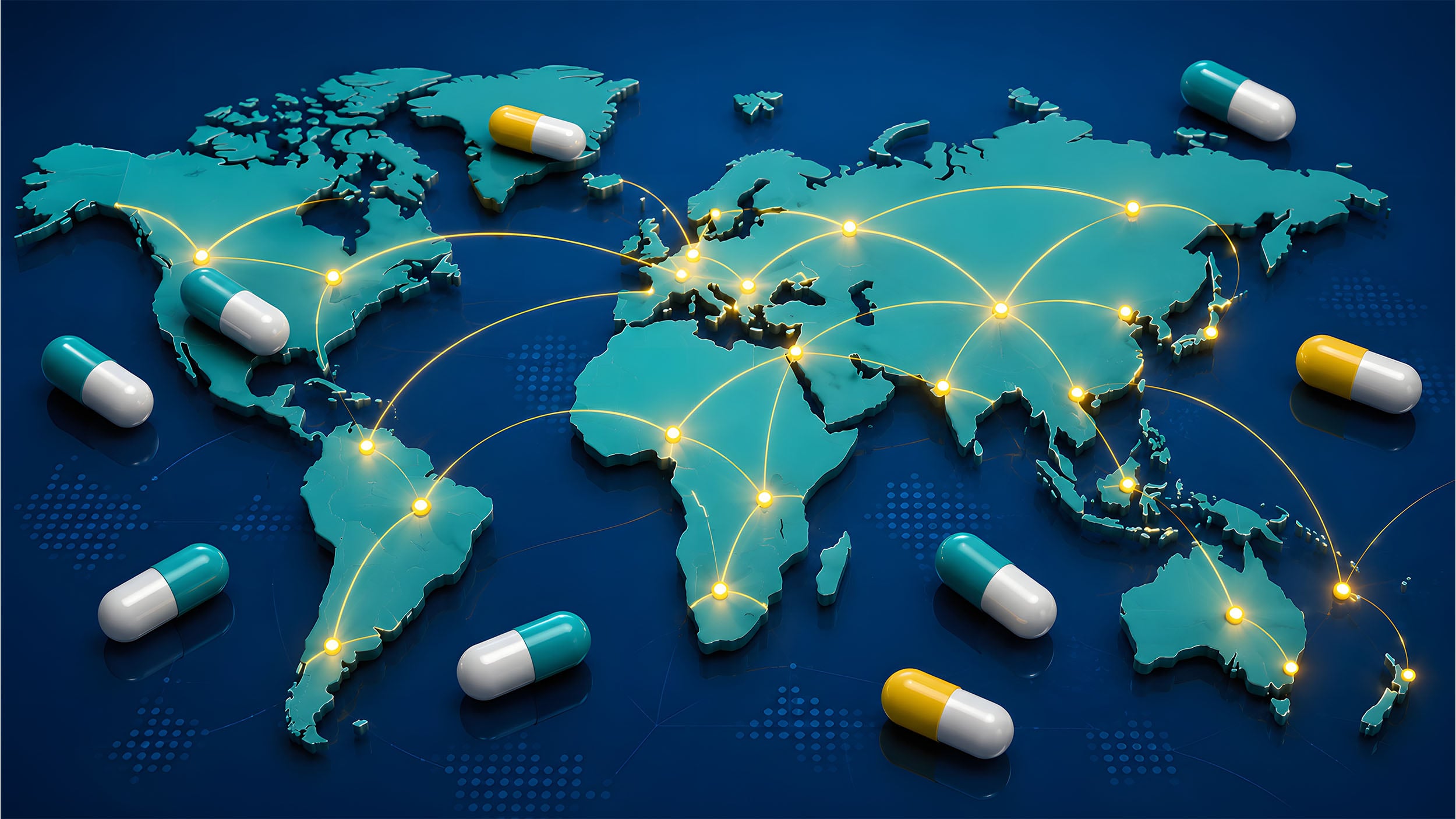
New research from the Leading Minds Network reveals that biologics, radiopharmaceuticals, direct-to-patient delivery, and ultra-cold logistics are experiencing a new competitive reality: success increasingly depends on coordinating complex partner networks, not simply controlling temperature and maintaining compliance.

Key Takeaways:
- Cold chain has evolved from a temperature challenge into a network orchestration challenge.
- Capacity alone will not solve biologics growth. Data management, visibility, and risk assessment are becoming equally important.
- The biggest operational gap is coordinating responses across partners when shipments go off plan.
- Change control is emerging as a significant compliance and scalability challenge.
- Direct-to-patient delivery and ultra-cold logistics require stronger economic and operational models to scale successfully.
- AI and decision-support tools are likely to become major competitive differentiators over the next five years.
For decades, pharmaceutical supply chain excellence was largely defined by control.
Controlling temperature.
Controlling compliance.
Controlling product integrity.
Controlling risk.
These priorities remain essential, but as biologics, advanced therapies, radiopharmaceuticals, and decentralized care models continue to expand, pharmaceutical supply chains are becoming increasingly interconnected and complex. In this environment, control alone is no longer enough.
Insights gathered through the Leading Minds Network community during a recent executive seminar in San Diego suggests that industry leaders are beginning to recognize a significant shift. Participants increasingly described pharmaceutical cold chain management not as a temperature-control challenge, but as a network-orchestration challenge shaped by visibility, coordination, infrastructure, compliance, scalability, and decision-making.
The implications extend well beyond logistics. They affect how organizations scale biologics, manage quality systems, support patient-centric delivery models, and prepare for the next generation of pharmaceutical therapies.
How Are Biologics Stress-Testing Traditional Supply Chain Models?
One of the clearest themes emerging from the research was the industry’s concern about readiness for biologics at scale.
When participants were asked where the largest readiness gaps exist, they highlighted capacity and infrastructure, but they also emphasized data management, visibility, and risk assessment.
That distinction is important because it reflects a broader evolution in how supply chain leaders think about growth.
As biologics portfolios grow, operational intelligence is becoming as important as infrastructure.
Historically, scale challenges were often addressed through additional physical assets such as warehouse space, transportation capacity, packaging solutions, or inventory buffers. Today's biologics environment demands something more. Organizations must manage increasingly distributed operations that involve multiple logistics providers, manufacturing partners, healthcare facilities, and regulatory requirements simultaneously.
The challenge is no longer simply moving products from one location to another. It is understanding what is happening across the network, identifying risks early, and coordinating action quickly when conditions change.
Visibility Matters. Does Orchestration Matter More?
Perhaps the most revealing findings from the research involved shipment recovery. Participants indicated that when a cold chain shipment goes off plan, the most significant challenge is not detecting the problem.
The greatest struggle is coordinating across partners to resolve it. This concern ranked above issue identification, ownership determination, and access to real-time data.
This finding highlights a critical distinction between monitoring and orchestration.
Over the last decade, the pharmaceutical industry has invested heavily in technologies that improve visibility. Sensors, tracking platforms, condition monitoring systems, and real-time alerts are generating more data than ever before. Yet visibility alone does not solve a disruption.
Successful recovery requires aligned decision-making, clearly defined escalation paths, established responsibilities, quality oversight, and coordinated action among multiple stakeholders. Manufacturers, logistics providers, distributors, clinical sites, and healthcare organizations must often work together under significant time pressure
In practice, competitive advantage increasingly depends on how effectively organizations transform information into action. The leaders who can coordinate faster across their networks may ultimately outperform those who simply see problems sooner.
Change Control Is Emerging as a Strategic Risk
Participants identified change control as the most difficult regulatory and quality requirement to achieve within modern pharmaceutical supply chains operations today.
While temperature excursions and transportation disruptions often receive greater attention, change control sits at the center of compliant growth. Today's pharmaceutical networks constantly evolve through:
- New transportation lanes
- New distribution partners
- New packaging systems
- New monitoring technologies
- New patient-delivery models
- New operational requirements
Every change introduces additional documentation, validation, training, risk assessment, and quality-review obligations. The result is a growing tension between agility and compliance.
Organizations are being asked to innovate faster while simultaneously maintaining validated and compliant operating environments. As supply chains become more dynamic, the ability to manage change effectively may become one of the strongest indicators of operational maturity.
Why Do Radiopharmaceuticals Leave Little Room for Error?
The radiopharmaceutical discussion revealed another important dimension of the industry’s future.
Participants ranked transportation speed and routing as the greatest risks associated with radiopharmaceutical logistics.
Unlike many traditional pharmaceutical products, radiopharmaceuticals operate within extremely narrow time windows. Delays can destroy product viability, disrupt patient scheduling, and erode clinical or commercial value. This reality fundamentally changes the logistics equation. Chain of custody, documentation and compliance remain essential.
Yet in radiopharmaceutical distribution, operational timing can become the most unforgiving constraint. That finding underscores a broader industry trend.
Pharmaceutical supply chains are increasingly supporting therapies that require highly synchronized execution across multiple stakeholders.
Transportation providers, treatment sites, distributors, healthcare professionals, and manufacturers must coordinate with extraordinary precision. As advanced therapies continue to expand, the ability to orchestrate time-critical operations may become a defining differentiator.
How Do Direct-to-Patient Deliveries Impact Local Capability?
Few trends have generated more interest in recent years than direct-to-patient delivery.
The promise is compelling. Delivering therapies directly to patients can improve convenience, expand access, support decentralized care models, and reduce pressure on healthcare facilities.
However, the research suggests that implementation remains challenging.
Participants identified location, infrastructure, and cost as the primary barriers to wider adoption of direct-to-patient biologic delivery.
The finding serves as an important reminder that patient-centric models are not infrastructure-neutral. Success on the local level depends on several important factors: geographic coverage, trained personnel, compliant handling procedures, service availability, care coordination, and economic viability.
Organizations pursuing direct-to-patient strategies may need to think less about broad adoption and more about market-by-market readiness. The most successful programs will likely be those that align ambition with local operational capability.
Is Economics the Next Challenge for Ultra-Cold Logistics?
Ultra-cold and cryogenic transportation continue to attract significant attention as advanced therapies move through development and commercialization.
Interestingly, participants ranked cost and scalability as greater concerns than packaging performance or shipment duration.
This represents a notable shift in perspective. The industry's focus seems to be moving beyond technical feasibility. Many organizations have already demonstrated that ultra-cold distribution can be achieved safely and compliantly. The more pressing question now is whether those models can be scaled sustainably.
Can organizations operate these networks repeatedly? Can they maintain compliance economically? Can they support growing demand without introducing prohibitive costs?
The future success of many advanced therapies may depend on answering those questions. Ultimately, commercial scalability may prove just as important as scientific innovation.
Is Decision Support The Next Maturity Phase?
One of the most forward-looking aspects of the research involved the actions participants believe organizations should prioritize moving forward.
Recurring themes included collaboration, visibility, data sharing, data ownership, innovation, AI, and risk management. Taken together, those responses point toward the next stage of pharmaceutical supply chain maturity.
The future will be defined by better and faster decision-making.
Organizations increasingly need the ability to convert data into insight, insight into action, and action into coordinated outcomes across complex partner ecosystems. AI, predictive analytics, and decision-support tools may ultimately create the greatest value when they help organizations accelerate collaboration, prioritize exceptions, predict disruptions, and improve cross-functional response.
What is the Future of Cold Chain Logistics?
The research findings from the Leading Minds Network seminar reveal a consistent message across biologics, radiopharmaceuticals, direct-to-patient delivery, and ultra-cold logistics: pharmaceutical supply chains are becoming more interconnected, more dynamic, and more dependent on cross-partner coordination than ever before.
The competitive frontier is moving toward orchestration.
Organizations are seeking to become more capable of orchestrating complex, compliant, visible, and scalable networks across a rapidly evolving healthcare ecosystem. They will connect partners more effectively, make decisions faster, and respond to change with greater confidence.
The Leading Minds Network powered by ELPRO and Cold Chain Technologies is a global collaborative learning community that brings together pharmaceutical, life science, healthcare and logistics industry professionals to share ideas and best practices in a common mission to provide safe and effective medicines and therapies to patients worldwide.




Leave a Comment