


.svg)
.svg)

28.08.2026
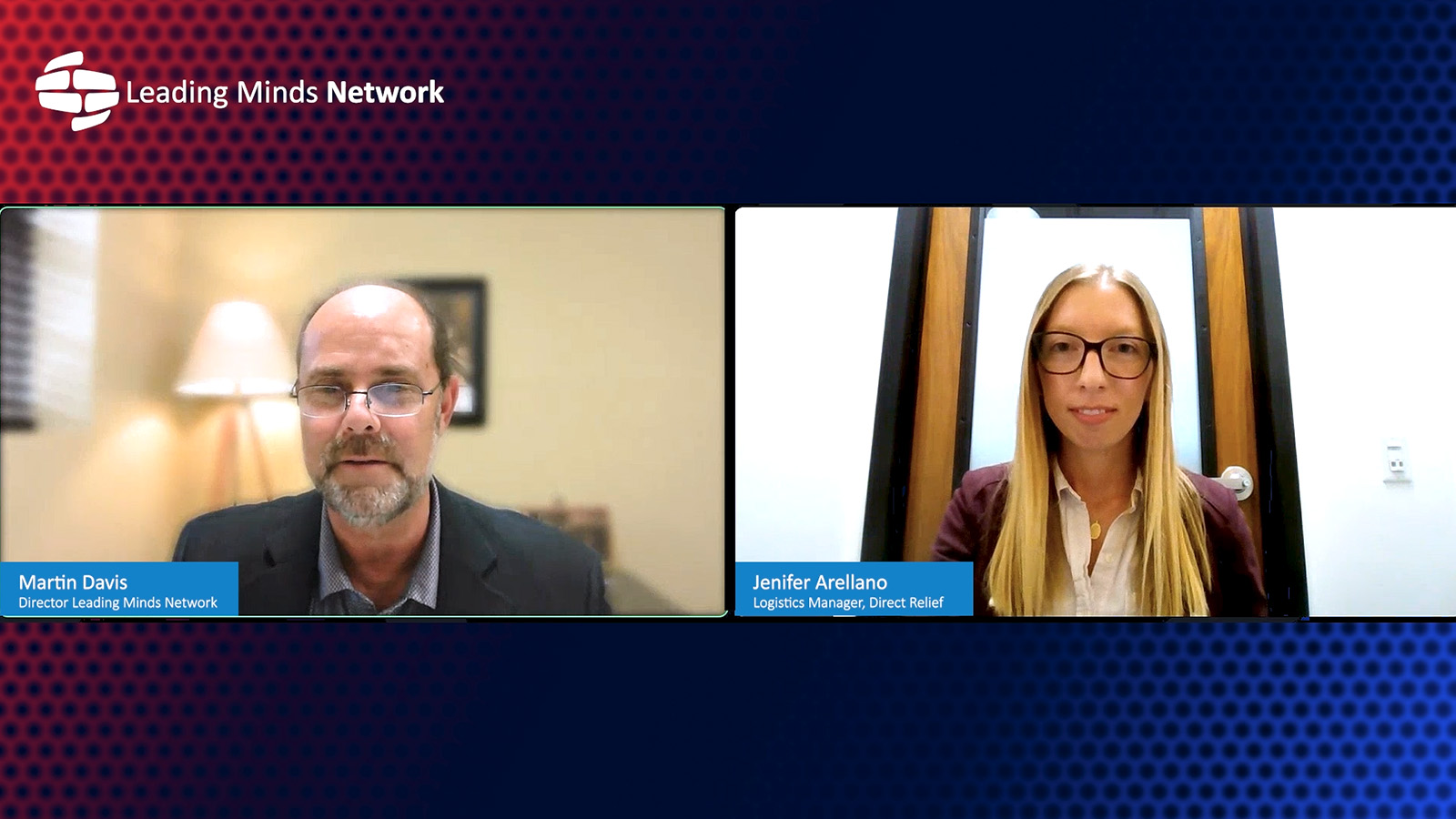

Click to Watch/Listen to the Full Interview
Published October 2026 | Author: Martin Davis, Leading Minds Network | Photo: Lara Cooper/Direct Relief
In this segment of Leading Minds Network Executive Insights, Jenifer Arellano, Logistics Manager at Direct Relief, shares how humanitarian organizations safeguard temperature-sensitive medicines in some of the world's most challenging environments. From unreliable transportation networks and limited cold chain infrastructure to customs delays and power constraints, she explains how resilience, adaptability, and creative problem-solving enable life-saving medicines to reach patients who need them most.
Key Takeaways
- Humanitarian supply chains operate where infrastructure can change rapidly
- Pharmaceutical quality standards do not change based on geography or infrastructure
- Real-time monitoring is transformative and enables proactive intervention
- AI and predictive analytics are the next frontier in cold chain visibility
- Strong leadership depends upon cross-training, trust, and empowering teams
- Building resilient healthcare supply chains can require investments in local infrastructure
What happens when life-saving medicines need to reach patients in places where reliable transportation is limited, power infrastructure is inconsistent, and cold chain capabilities may barely exist?
For Arellano, that challenge is not hypothetical. It is the reality her team navigates daily while coordinating the delivery of donated medicines and medical supplies to approximately 90 countries around the world.
How Do You Build a Supply Chain for Uncertainty?
One of the strongest themes that came out of the conversation was the importance of planning for disruption rather than assuming everything will go according to plan.
“In humanitarian logistics, we always anticipate something may change. Flights cancel. Borders close. We have limited infrastructure at the destination,” Arellano explained. “We build flexibility into our processes from the beginning.”
Arellano noted that commercial supply chains often operate within established transportation networks. “This is often not the case in humanitarian healthcare logistics. It often requires teams to adapt quickly when conditions shift. Routes change. Infrastructure may not exist. Transportation options often disappear without notice,” she said.
As a result, she says resilience is not simply a contingency plan. It becomes an everyday operating philosophy.
Is Creativity a Critical Cold Chain Capability?
Arellano shared an example involving a humanitarian shipment destined for Eritrea. Traditional transportation options were limited and existing airfreight solutions proved impractical.
The team ultimately developed an unconventional multimodal routing strategy that combined air and ocean transport to maintain product integrity while overcoming infrastructure and transportation constraints. While not the most cost-effective solution by traditional commercial standards, it ensured medicines reached patients safely.
Stories like these highlight an important distinction between efficiency and effectiveness.
Humanitarian logistics leaders often operate where success is measured less by optimization and more by the ability to solve problems on the fly, when standard solutions are unavailable.


Pharma Cold Chain Quality Standards Cannot Change
A particularly important lesson from the discussion involved quality and compliance.
“We don't lower our standards because we're operating in challenging environments,” said Arellano. “The standard doesn't change.”
Rather than accepting infrastructure limitations, Direct Relief works proactively with partners to build capabilities that support pharmaceutical quality requirements. Initiatives include providing solar-powered refrigeration systems, battery backup technologies, cold storage infrastructure, and other resources that enable medicines to be stored safely even in remote regions.
The message is highly relevant for pharmaceutical, healthcare, and logistics leaders worldwide: quality standards are always maintained, regardless of geography or circumstance.
How Is Emerging Technology Enabling End-To-End Visibility?
The conversation also explored emerging innovations shaping the future of healthcare logistics. Arellano highlighted the significant impact that real-time temperature monitoring has already had on humanitarian supply chains.
“Being able to know where a shipment is and what conditions it has been stored in has allowed us to intervene and prevent temperature excursions that otherwise could have resulted in product loss,” she explained.
Real-time visibility also streamlines product release processes by eliminating delays.
Arellano noted that many delays associated with manual downloading, reviewing, and sharing temperature data after shipment arrival can be avoided.
Looking ahead, she sees predictive analytics as the next major evolution. “Real-time monitoring tells you when something is going wrong. Predictive analytics can help identify when something will need your attention before it becomes a problem.”
Leadership Under Pressure
Despite advances in visibility, data, and automation, Arellano repeatedly returned to one theme: people make the difference. Her leadership philosophy centers on two principles: training and trust. “If people are well trained, then you need to trust them to make the decisions they need to make” she explained.
Cross-training, knowledge sharing, and team empowerment are essential in an environment where circumstances can change rapidly.
A resilient organization is not built solely through technology, but through people who have the confidence and authority to act when plans change.
A Lesson for Every Supply Chain Leader
Although the discussion focused on humanitarian healthcare logistics, many of the lessons apply equally to commercial pharmaceutical and life sciences organizations.
Arellano says resilience is not about creating perfect plans. It is about preparing teams, systems, and processes to adapt quickly when conditions inevitably change.
“Humanitarian logistics is so much more than moving boxes from one location to another. It’s about building resilient systems, solving problems when expected solutions aren’t available, and empowering people to make good decisions in challenging circumstances,” she concluded.
Ultimately, she said, every decision comes back to the same mission: making sure the medicine safely reaches the people who need it.





Leave a Comment