


.svg)
.svg)

16.09.2026

Watch the full interview.
Published September 2026 | Author: Martin Davis, Leading Minds Network
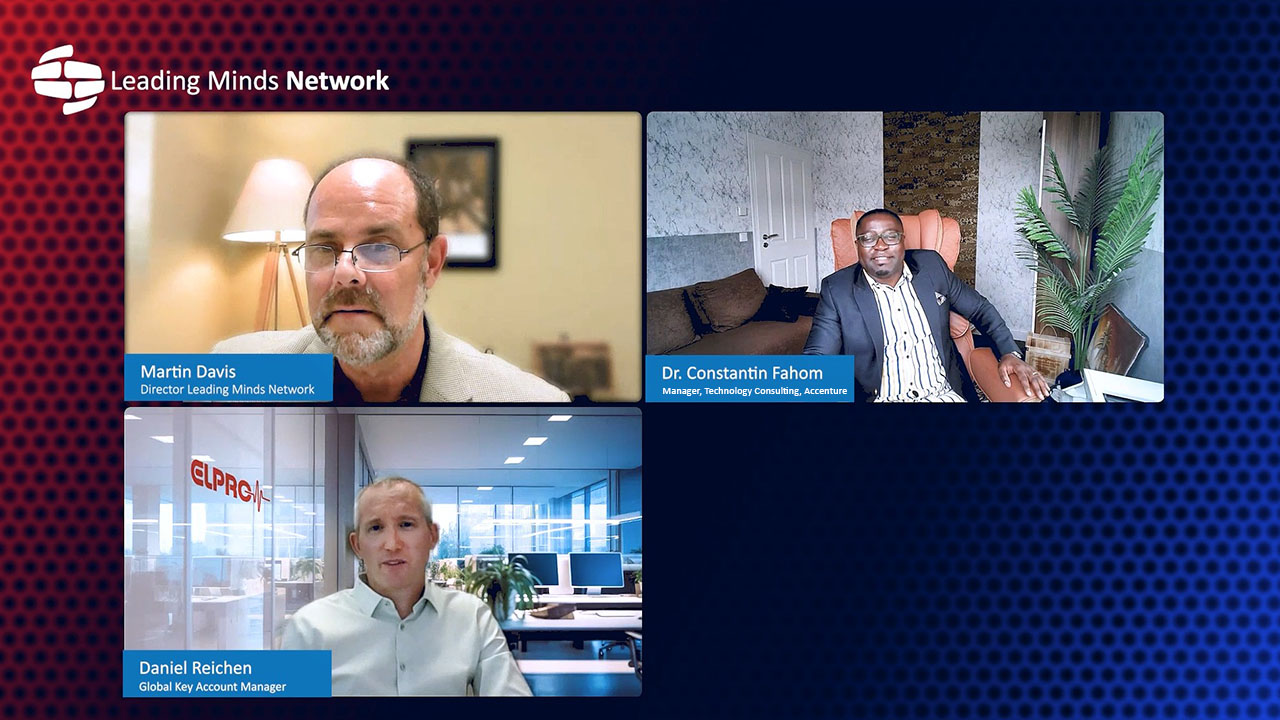
During a recent Leading Minds Network Executive Insights discussion, Dr. Constantin Fahom, Technology Consulting Manager at Accenture, and Daniel Reichen, Global Key Account Manager at ELPRO, explored why digital transformation projects may struggle in practice and what organizations can do differently to achieve measurable success.
What if digital transformation isn't really about technology at all?
That was one of the most provocative ideas from a recent conversation between Accenture's Dr. Constantin Fahom and ELPRO's Daniel Reichen.
Turns out, the organizations achieving the greatest success aren't measuring software and hardware adoption. They're measuring decision-making capability, speed, and business outcomes.
The central theme of the discussion was clear: digital transformation succeeds when organizations focus on capability, governance, adoption, and decision-making, not just technology.
The Research
Despite significant investments in technology, many initiatives still fail to deliver sustainable results.
Drawing from his doctoral research on digital transformation in European pharmaceutical organizations, Dr. Fahom explained that successful transformation depends on much more than selecting the right technology. Organizations must align these five critical dimensions:
-
Technology
-
Organizational Leadership
-
Regulatory Compliance
-
Business Processes
-
External stakeholders
Dr. Fahom also identified the following recurring success factors during his research study:
- Trusted data and effective system integration are foundational
- Governance must be operational, not merely documented.
- User adoption requires systems that are both easy to use and clearly connected to daily work.
- Leadership sponsorship must continue long after implementation to reinforce new behaviors and ways of working.
The Real-World Application
These research findings closely aligned with a large-scale temperature monitoring harmonization project described by Reichen. A global pharmaceutical customer faced a fragmented operational landscape of monitoring processes, inconsistent data visibility, significant manual workload, and limited ability to analyze performance across business units.
Rather than beginning with technology alone, Reichen first focused on process harmonization and operational alignment. A centralized cloud-based platform enabled standardized workflows, greater transparency, and automated data exchange between systems. Manual configuration tasks were eliminated, data quality improved, and quality teams were able to evaluate shipments against product-specific temperature requirements automatically.
A key lesson from the project was the importance of cross-functional ownership.
Representatives from multiple business units participated in project governance and decision-making from the beginning. Reichen explained that this collaborative approach helped build acceptance, reduced resistance, and created a shared understanding of the project's objectives.
The Alignment
Both Reichen and Dr. Fahom emphasized that implementation alone does not represent success. True transformation occurs when new systems become integrated into routine operations, users trust the data, leaders reinforce adoption, and organizations consistently use information to drive better business outcomes.
As Reichen noted, many organizations still view digital transformation as a technology initiative. The real opportunity lies in transforming data into faster, better decisions that improve quality, reduce waste, protect products, optimize operational efficiency and ultimately benefit patients.
The Ultimate Takeaway
Technology is necessary, but creating capability is what creates value. Organizations that focus on process design, governance, leadership, adoption, and trusted data are far better positioned to scale digital transformation successfully.





Leave a Comment